

Elastic Resilience —The Key to More Stable Screw Connections
Elastic Resilience as a Design Advantage
In the classical analysis of high-strength bolted joints, the focus is often exclusively on the magnitude of the initial preload. However, the functional reliability of a joint depends not only on the preload force itself, but also on the elastic system compliance of the entire joint.
Why system compliance is a key parameter in bolt design according to VDI 2230.
A key parameter here is the force transfer factor of the bolted joint. It describes what proportion of an external operating force is absorbed by the screw and what proportion is borne by the clamped components. The more favorable the ratio of elastic stiffnesses between the screw and the components, the lower the additional load on the screw under operating loads.
Spring-loaded fasteners specifically introduce additional elastic resilience into the system. This influences the ratio of system stiffnesses and reduces the force transmission factor. A larger portion of the operational force is absorbed by the clamped components, while the additional load on the screw decreases.
This targeted increase in system compliance directly improves the functional safety of the entire bolted joint.
Practical Implementation of System Compliance
The importance of system resilience for the functional reliability of bolted joints has long been recognized in bolt design according to VDI 2230. In practical design, however, sufficient resilience is often achieved through design measures, such as:
- longer clamping lengths
- additional shims
- softer components
- special joint geometries
However, these measures can lead to design constraints, increased space requirements, or higher costs.
Elastic fasteners, on the other hand, allow for a simple and targeted increase in system compliance directly within the fastener itself. This makes it possible to influence the elastic characteristics of the bolted joint with comparatively little design effort.
The targeted use of spring-loaded fasteners makes the elastic system compliance a practically useful design parameter in the design of bolted joints.
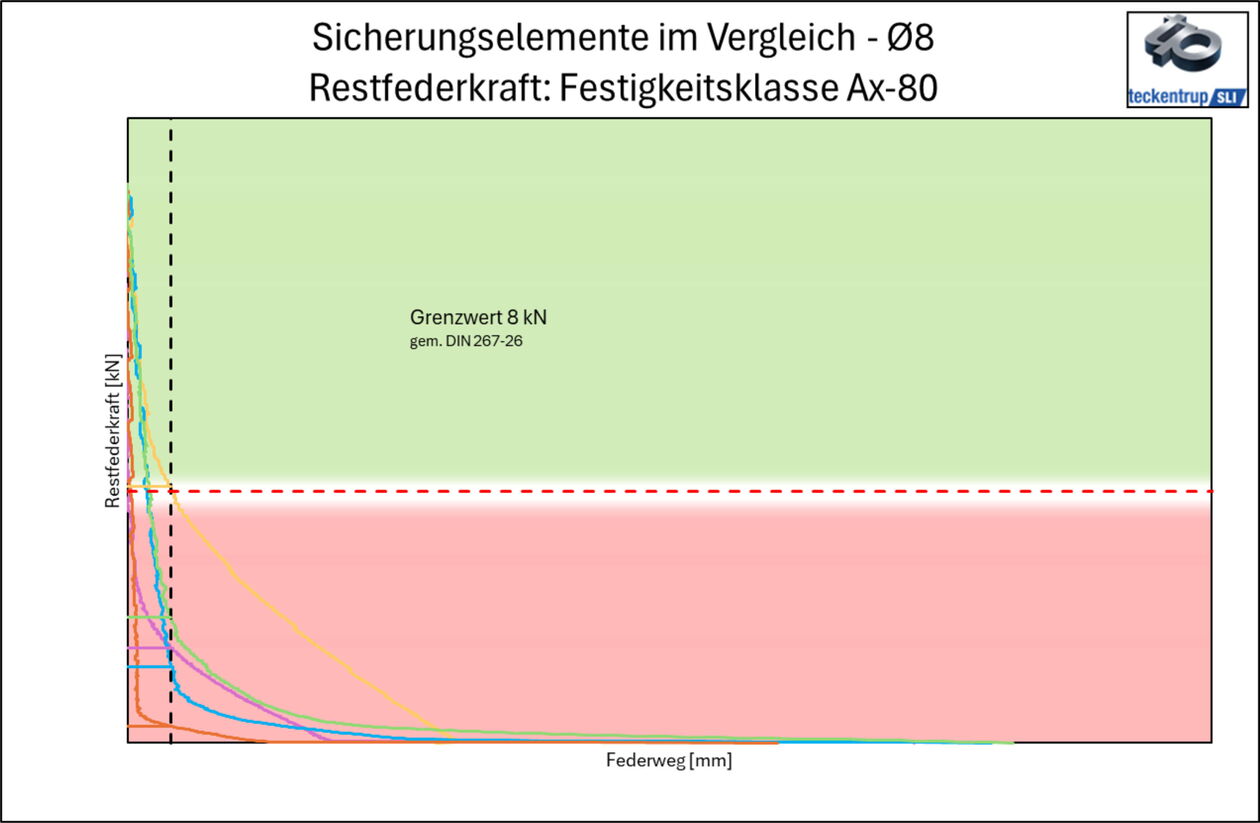
Verification of the spring effect according to DIN 267-26
In order for spring-loaded fasteners to actually exert this effect, a relevant, measurable, and reproducible spring effect is required. This is defined by the residual spring force test according to DIN 267-26.
The standard describes test procedures for determining the residual spring force after a defined load. Only fasteners that meet these requirements possess a verifiable spring effect and can specifically influence the system compliance of a bolted joint.
Fasteners without a defined residual spring force, on the other hand, often lack sufficient elastic effect and contribute only to a limited extent to stabilizing the preload.
Greater protection against slipping
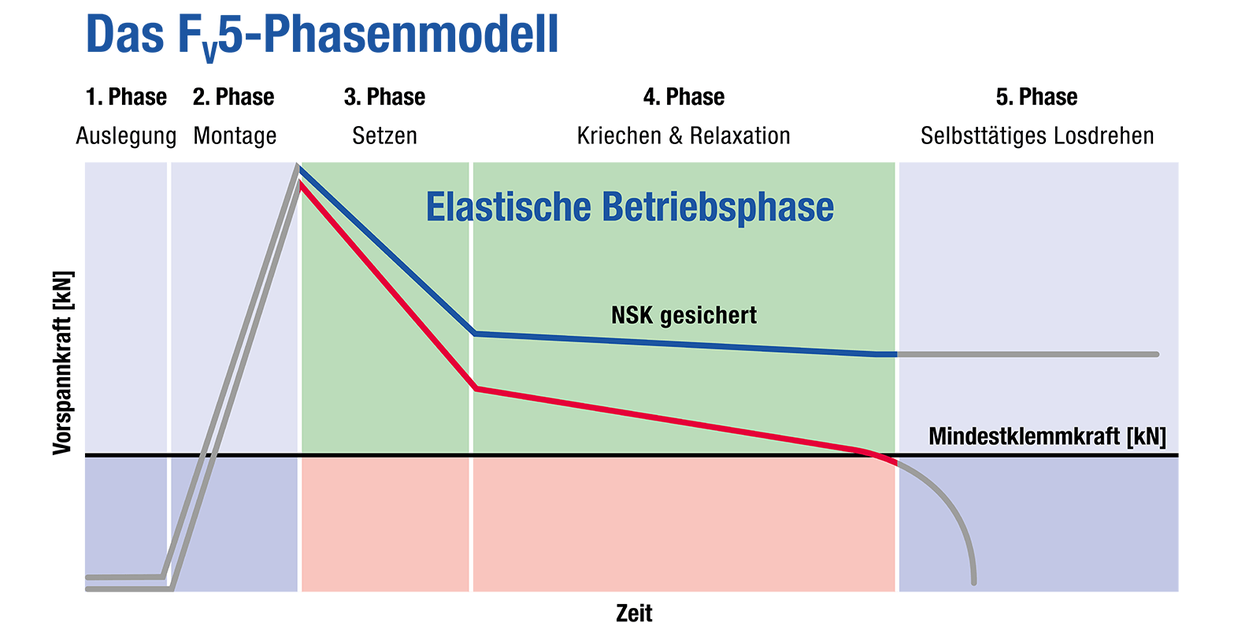
Resistance to slip between the clamped components is largely determined by the existing preload force. Spring-loaded fasteners stabilize this preload force throughout the entire service life of the joint. Settlement, relaxation, or thermal effects are elastically compensated, so that the contact pressure on the interface surface is largely maintained.
This increases the resistance to slip of the joint.
Increased resistance to prying open
Under external operating forces, the interface surface of a bolted joint may open partially. The additional resilience of spring-like fasteners reduces the portion of the operating force acting on the screw. This limits the additional stress on the screw and reduces the risk of the joint opening.
The resistance to the interface surface opening increases.
Reducing Stress on the Screw
Due to the reduced force transmission factor, the screw is subjected to less additional stress under operating loads. The screw operates more within the elastic range, while a larger portion of the load is absorbed by the clamped components.
This results in reduced stress on the screw and thus in higher fatigue strength of the entire fastener assembly.
Predictable Effect in Modern Bolt Design
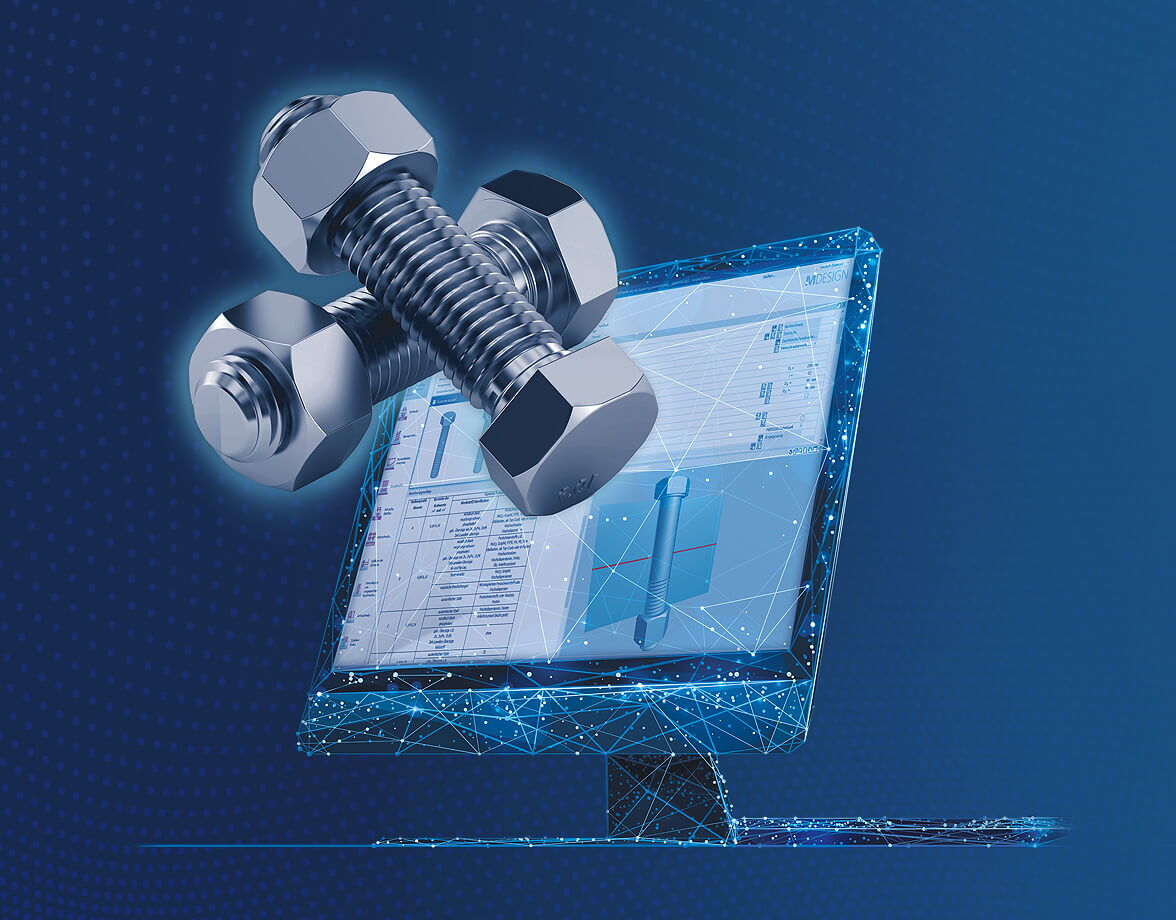
Today, the effect of spring-like fasteners can be systematically taken into account in the design of high-strength bolted joints according to VDI 2230, e.g., using MDESIGN. Modern calculation methods make it possible to evaluate the additional system compliance, as well as its influence on preload behavior, force transmission factor, and functional safety, as early as the design phase.
The result is more robust bolted joints with stable preload, greater resistance to slip and unclamping, and reduced stress on the screw over the entire life cycle of the joint.
Get your free white paper now

A Systematic Approach to Screw Security
The NSK washer combines structural, preventive, and reactive safety throughout all five life stages of the bolted joint.
Watch the video now to understand how it works.
Elastic Resilience
DIN 267-26
Relaxation