

NSK-LStandard Screw Connections & Slotted Hole Fasteners up to Property Class 12.9
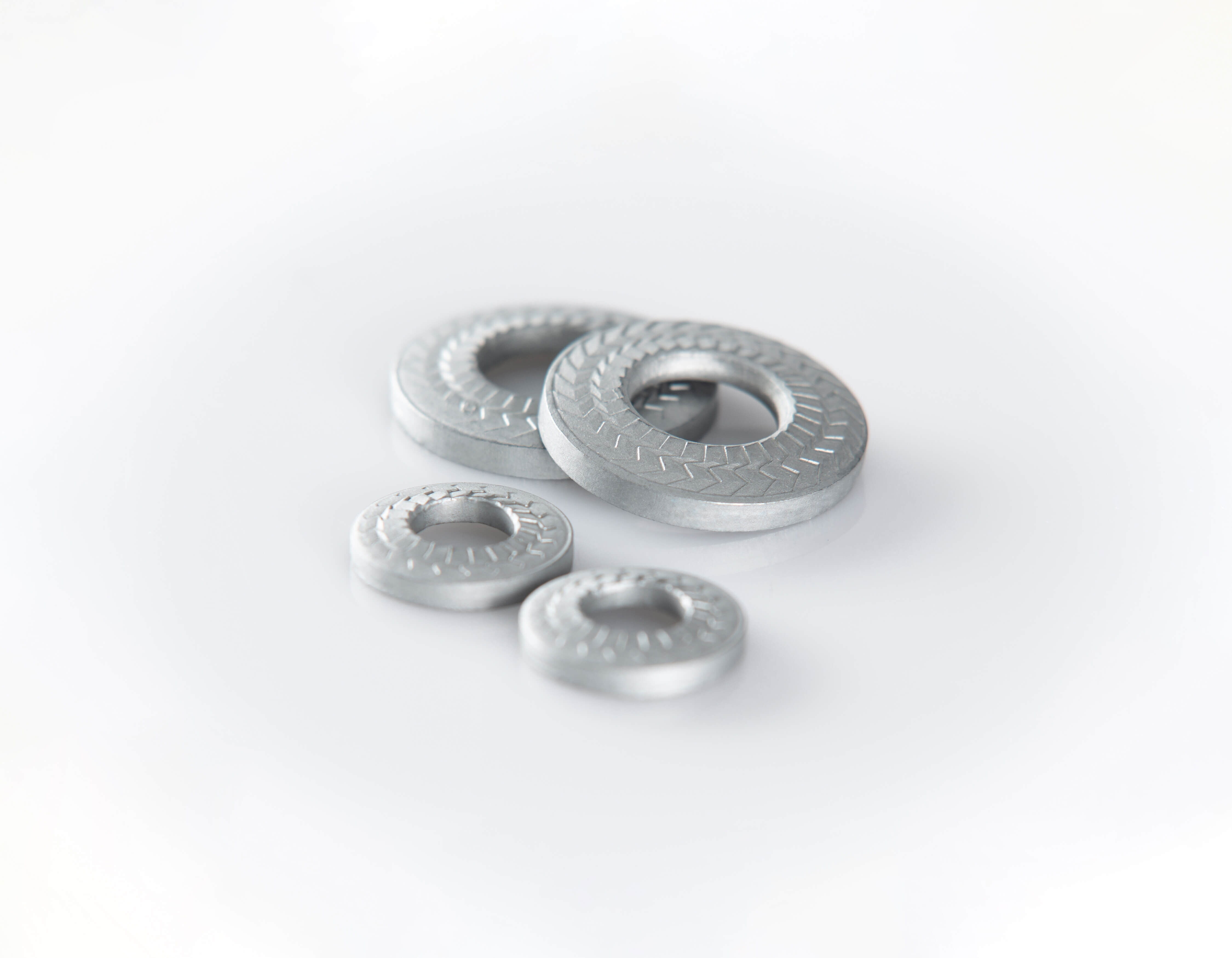
Applications
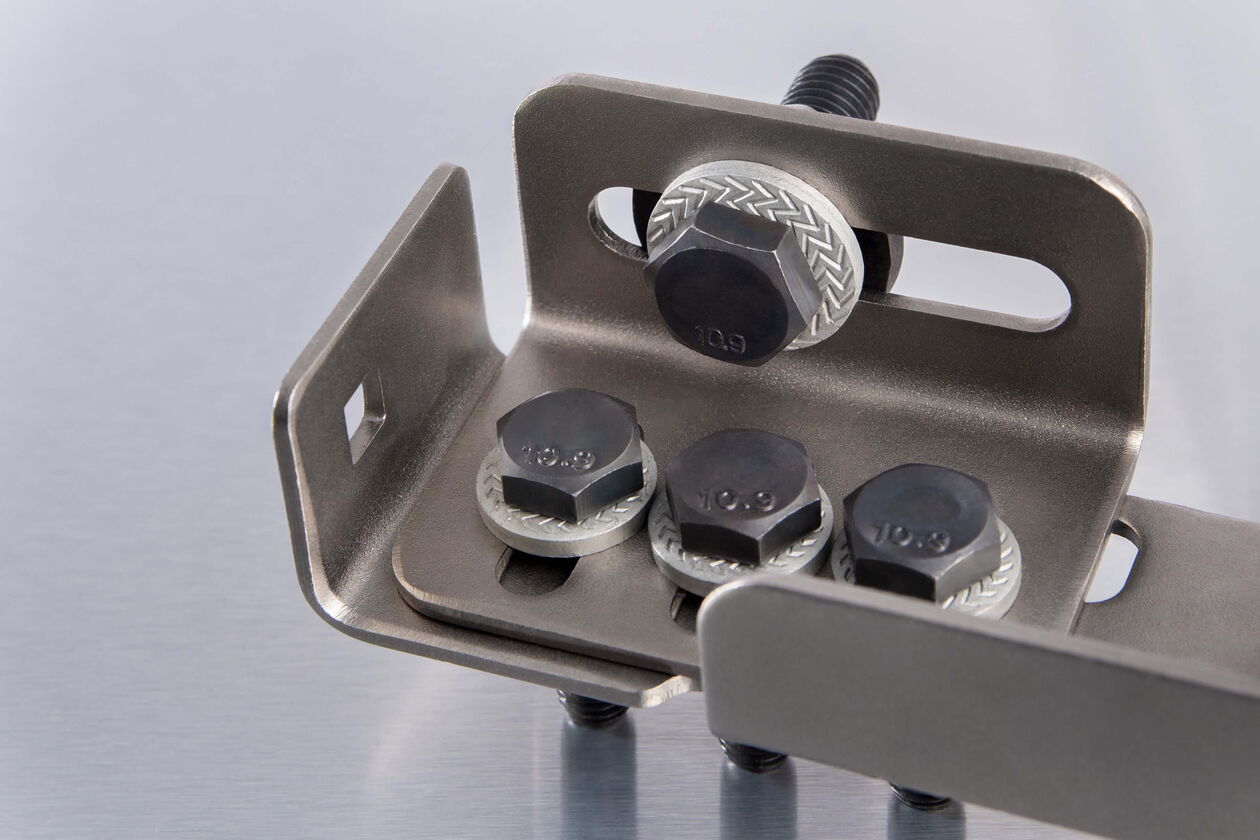
- High-stress and high-strength bolted joints in accordance with VDI 2230-1
- Friction-locked, static, and dynamic transmission of operational loads via the clamped components
- Property classes 8.8 to 12.9
- Both round-hole and slotted-hole connections
- Effective even with limited installation space (see also NSK-B for larger installation spaces)
Advantages of the NSK-L (multifunctional)
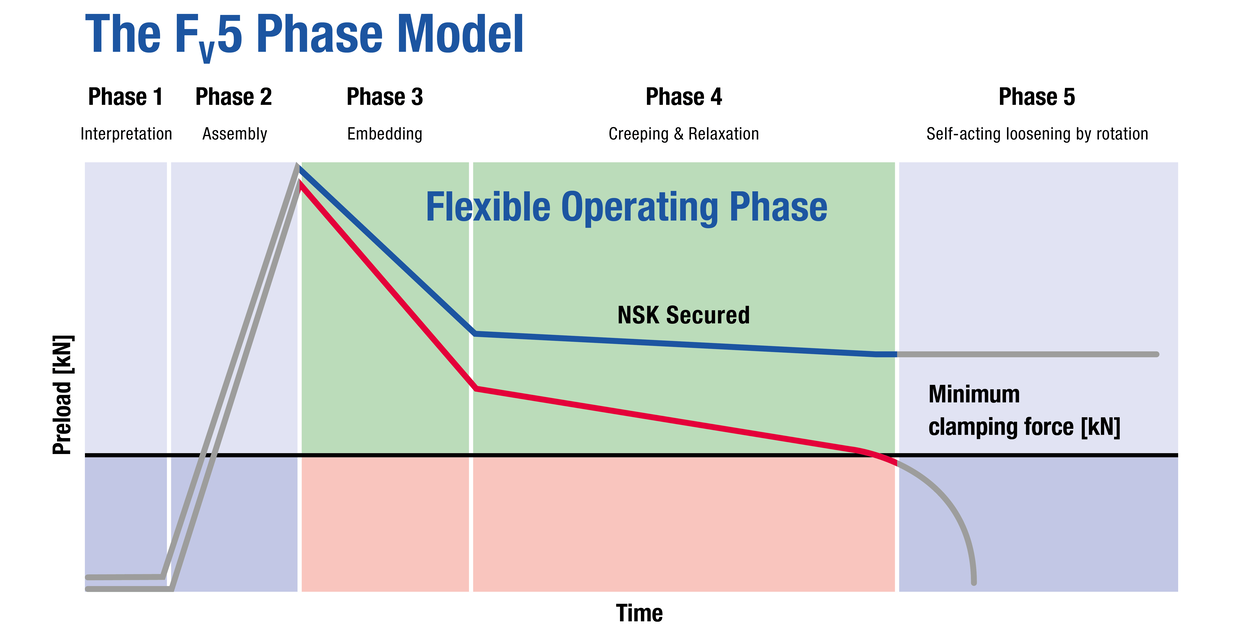
- Preload stability throughout the entire service life
Maintains and stabilizes the preload despite embedding, creeping, and relaxation processes—not just protection against loosening. - Multifunctionality instead of conflicting objectives
Combines resistance to loosening (elastic resilience) and resistance to unscrewing in a single system—instead of the functional limitations of traditional securing elements. - Increased slip resistance and operational reliability
Improves load transfer and increases protection against slip and the connection coming apart.
- Predictable and designable in accordance with VDI 2230
Defined resilience and residual spring force enable a reproducible, standards-compliant design of the bolted joint. - Reliable under dynamic and real-world operating conditions
Secures bolted joints even under vibrations, varying loads, and limit stresses. - Assembly- and cost-efficient system design
Reduces component variety, optimizes material usage, and sustainably lowers total and process costs while increasing operational reliability.
Difference Between the Locking Washer and the NSK Washer
Lock-edge washer
The locking washer was developed in the early 1990s as a pure anti-loosening element for bolted connections.
It reflected the state of the art at the time, e.g., in accordance with BN 208 010, which is no longer current. Locking washers have no significant effect on system flexibility or resistance to loosening and are therefore no longer considered state of the art.
NSK Washer
Today’s modern bolted joints place significantly higher demands on clamping force stability, system flexibility, and operational reliability.
The NSK washer was developed to meet these expanded requirements for bolted joints. It is a multifunctional securing element that reliably prevents loosening and slackening while simultaneously increasing the system’s elastic compliance.
Compliant with current standards such as DIN EN 17976, NSK washers also meet the requirements of DIN 25201-4 and DIN 267-26. With identical dimensions and costs, the NSK technically represents a new generation of securing elements.
Conventional securing elements can generally only prevent slackening or unscrewing, whereas the NSK combines both functions in a single element.
| Locking washer | NSK | |
|---|---|---|

|

|
|
| Spring effect, compensation for slackening effects (DIN EN 17976, DIN 267-26) |

|

|
| Increased elastic resilience and sliding strength (according to VDI 2230) |
|
|
| Weight reduction and expanded design options |
|
|
| Uniform pressure cone |
|
|
| Costs |

|
|
| Installation Dimensions |
|
|
Elastic Resilience—The Key to More Stable Screw Connections
Spring-loaded fasteners specifically increase the system compliance of bolted joints and can now be factored into calculations when designing according to VDI 2230.
While sufficient resilience could previously often only be achieved through complex design measures, it can now be easily and precisely integrated into the bolted joint using effective spring-loaded fasteners.
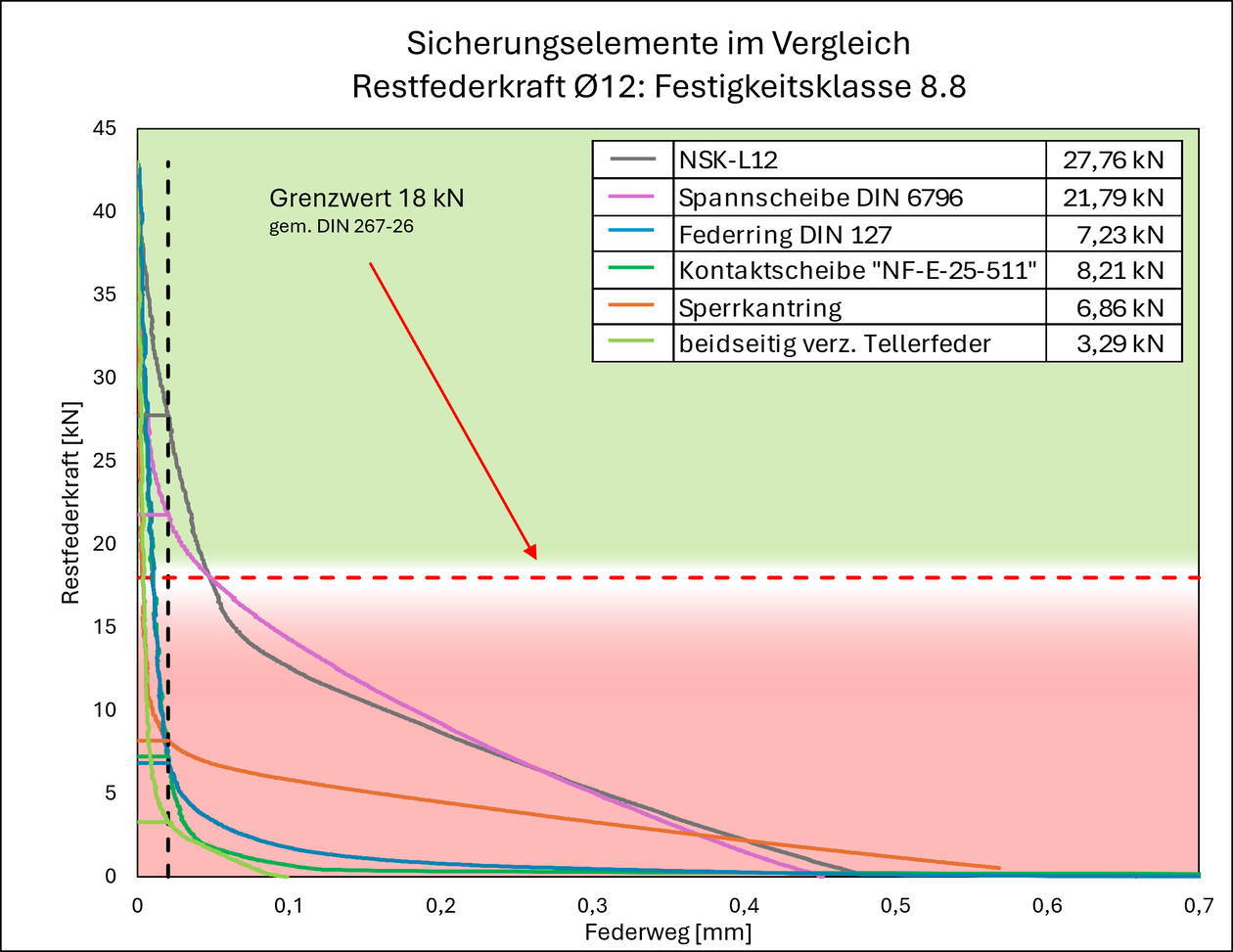
A prerequisite for this is a measurable and reproducible spring effect of the fastener. This is verified by the residual spring force test in accordance with DIN 267-26. Only fasteners with a defined residual spring force can specifically influence the
system compliance of the connection.
The results are greater protection against slipping and unclamping, reduced stress on the screw, and significantly higher long-term stability of the entire connection.
Comparison of Possible Solutions for High-Stress and High-Strength Screwed Joints
| Spring ring + U-Washer | Clamping Washer | Wedge-lock washer | Lock Washer | Lock Washer | NSK-L | |
|---|---|---|---|---|---|---|

|

|

|

|
|

|
|
| Compensation for loosening effects (in accordance with DIN 65151 / DIN 25201–4) |
|
|
|
|
|
|
| Spring effect, compensation for slackening effects (in accordance with DIN EN 17976, DIN 267-26) |
|
|
|
|
|
|
| Increased elastic resilience and sliding strength (according to VDI 2230) |
|
|
|
|
|
|
| One-piece screw lock solution |
|
|

|
|
|
|
| Elastic overload protection |
|
|
|
|
|
|
| Defined / reproducible contact pressure (coefficient of friction) |
|
|
|
|
|
|
| Weight reduction and expanded design options |
|
|
|
|
|
|
| Uniform pressure cone |
|
|
|
|
|
|
| Corrosion protection (steel > 720 h NSS per ISO 9227) |
|
|
|
|
|
|
detected / typically present
limited / application-dependent
Not verified / Not a primary function
Variants
| Spring steel EN 1.1211 / 1.1221 / 1.1231 |
Other materials: EN 1.4547, EN 2.4819, EN 2.4668 (available upon request) | |
|---|---|---|
| Hardness / Strength | ≥ 430 HV10 | depending on the material |
| Coating | Zinc-laminate coating | - |
| Corrosion protection | > 720 hours in a salt spray test (in accordance with ISO 9227) | depending on the material |
| Temperature Range | -40°C to 150°C | depending on the material |
| Screw Grade | 8.8 - 12.9 | depending on the material |
| Dimension Range | M6 - M20 | as needed |
Areas of Application


A bolted joint is a system
that, based on the basic function of “clamping,” is subdivided into several subfunctions.
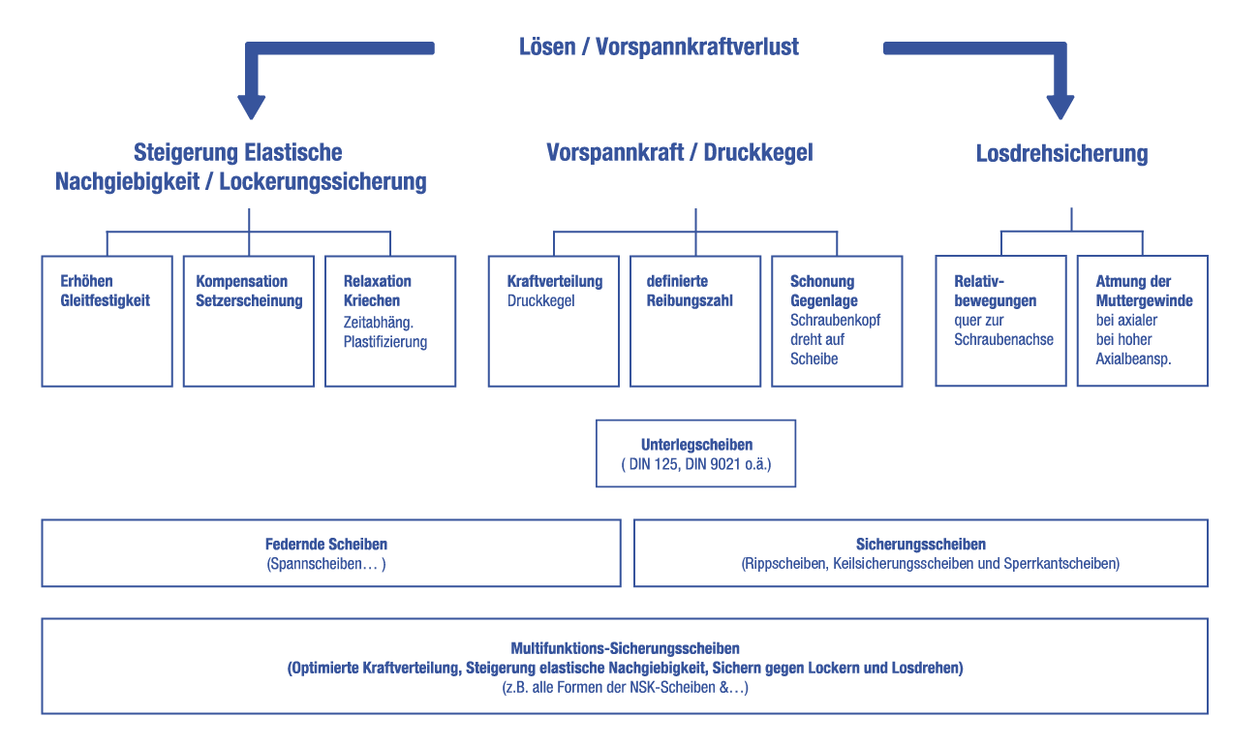

The 3 Pillars of Thread Locking
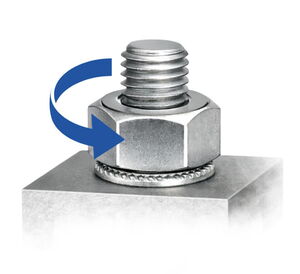
Anti-rotation device
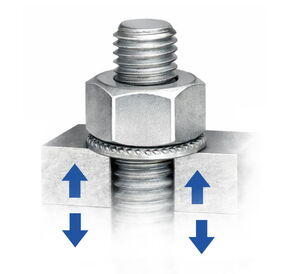
Anti-loosening device
Corrosion protection

Two functions, one screw lock
Anti-loosening device
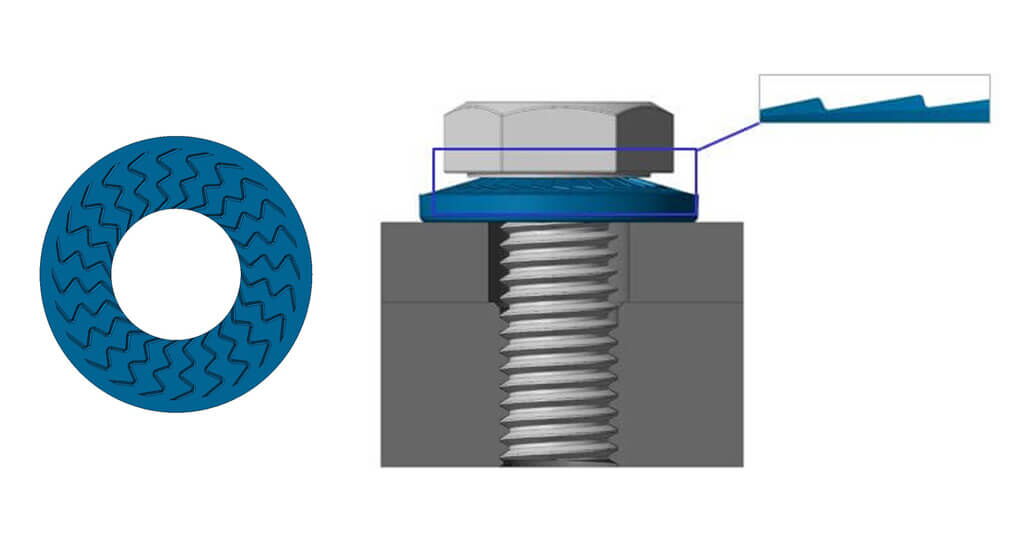
Friction-fit, spring-loaded with an arched geometry tailored to the preload force depending on the property class.
- Increases the resilience of the bolted joint
- Prevents slackening in accordance with DIN 267-26
Anti-rotation device
Form-fit locking effect provided by the teeth under the screw head or on the nut.
- Enhances the locking effect against self-acting loosening by rotation in accordance with DIN 65151 / DIN 25201-4
Are NSK washers reusable?
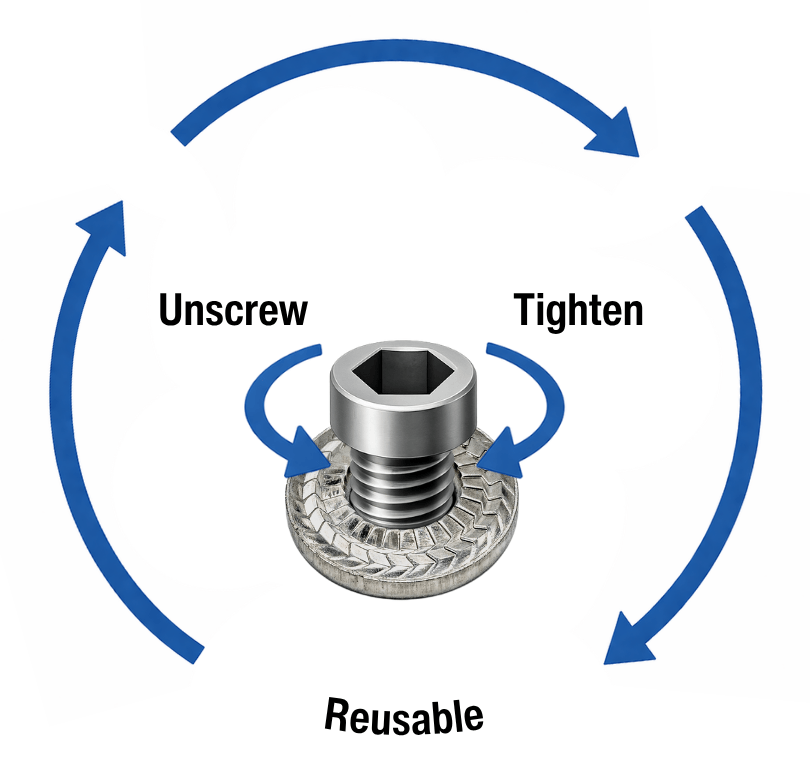
NSK washers feature defined and reproducible spring characteristics and—provided their functionality has been verified and the normative conditions are met—can also be reused depending on the type of bolted joint.
However, when assessing reusability, it is not only the securing element that is decisive, but the entire bolted joint in the specific application.
teckentrup SLI takes a holistic, system-oriented approach to this, in which all relevant factors are taken into account.
Reusability—particularly for highly loaded bolted joints—is not a standard case but rather an application-specific decision that requires a technical evaluation. Without appropriate verification, both functional and legal risks may arise—especially when medium-level safety requirements are involved.
For a reliable assessment, tests regarding the coefficient of friction, preload force, and resistance to self-loosening are required—tailored to the application and the number of assembly cycles. In addition, the user must ensure that tightening cycles are documented and that defined service limits are adhered to.
In safety-critical applications or when using superelastic tightening methods, reuse is generally not intended.
Why doesn't the NSK disc turn when it's being tightened?
The behavior of the NSK disc is based on its specific geometry and the targeted design of the force transmission.
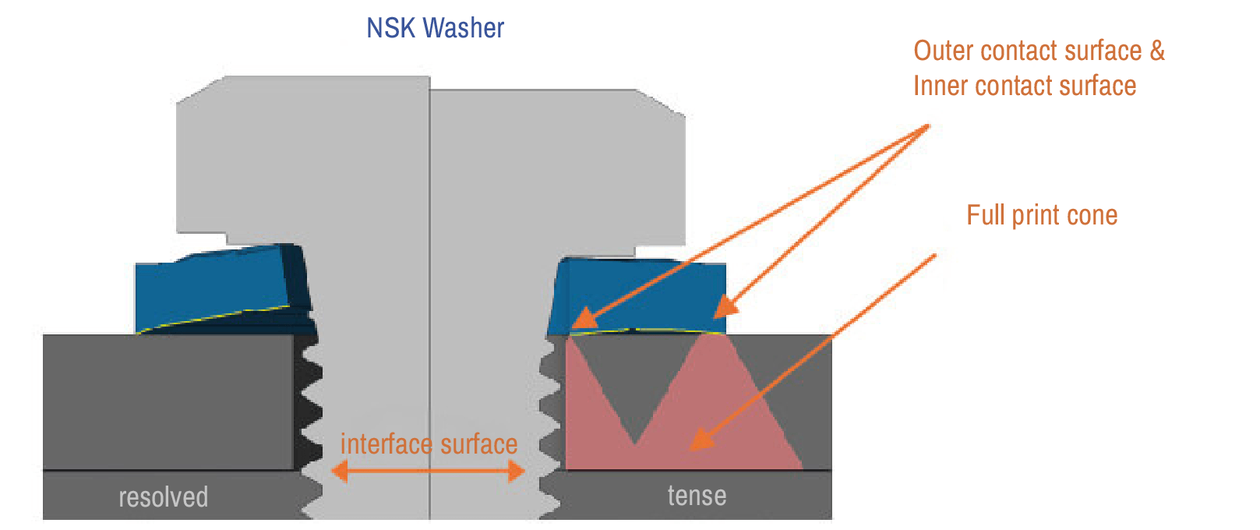
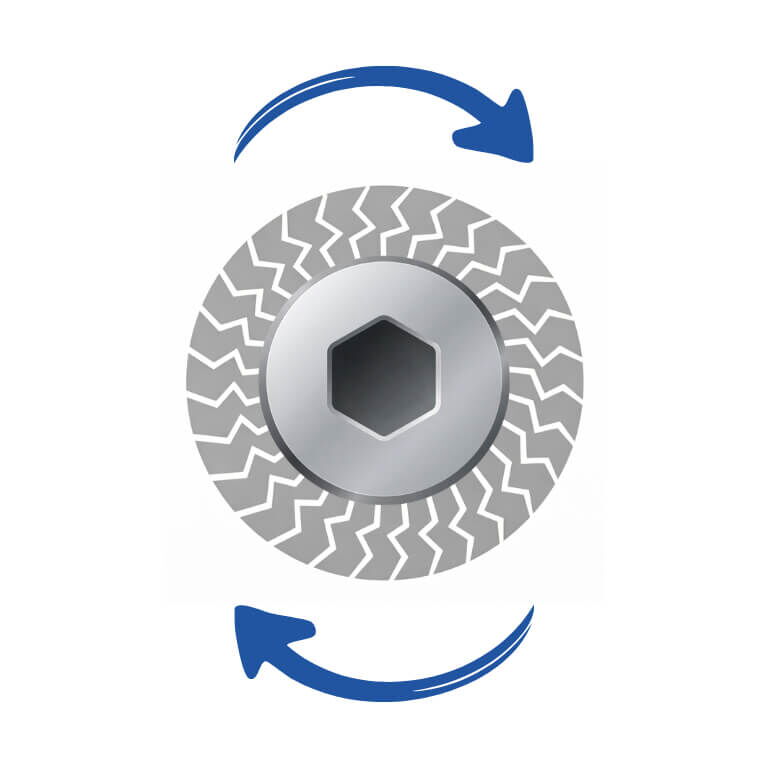
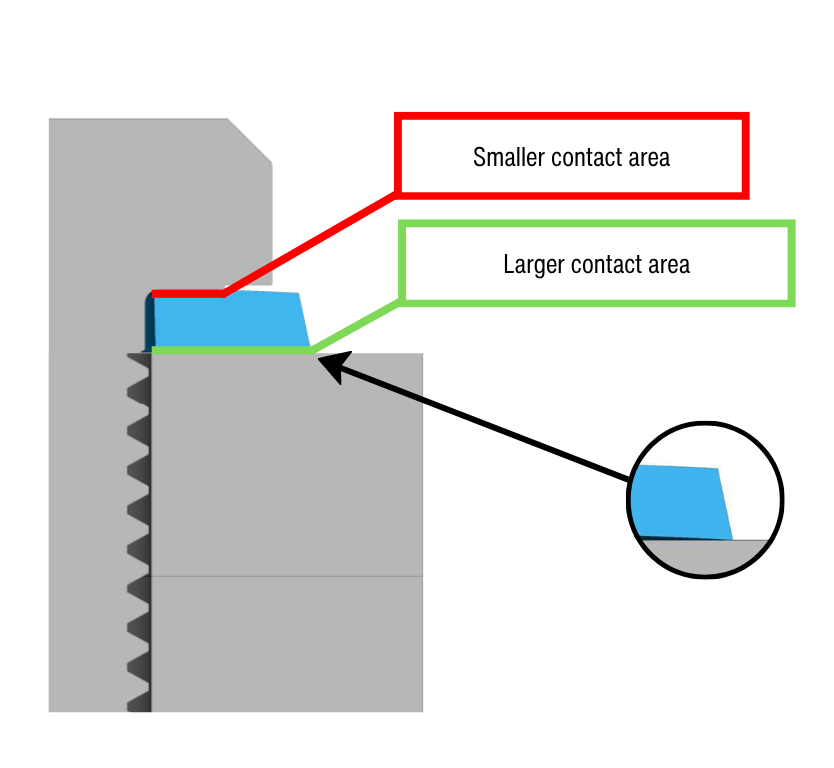
During tightening, the torque is initially transmitted through a smaller, annular area at the inner diameter, while the disc simultaneously bears against the mating surface via its larger outer diameter.
Due to the geometry of the NSK washer, a higher holding torque is generated at the outer diameter than the torque applied at the inner diameter. As a result, the washer remains stable in position and does not rotate during tightening.
Result: A defined force application, stable mounting conditions, and a reproducible preload.
How are NSK-L bearings tested?
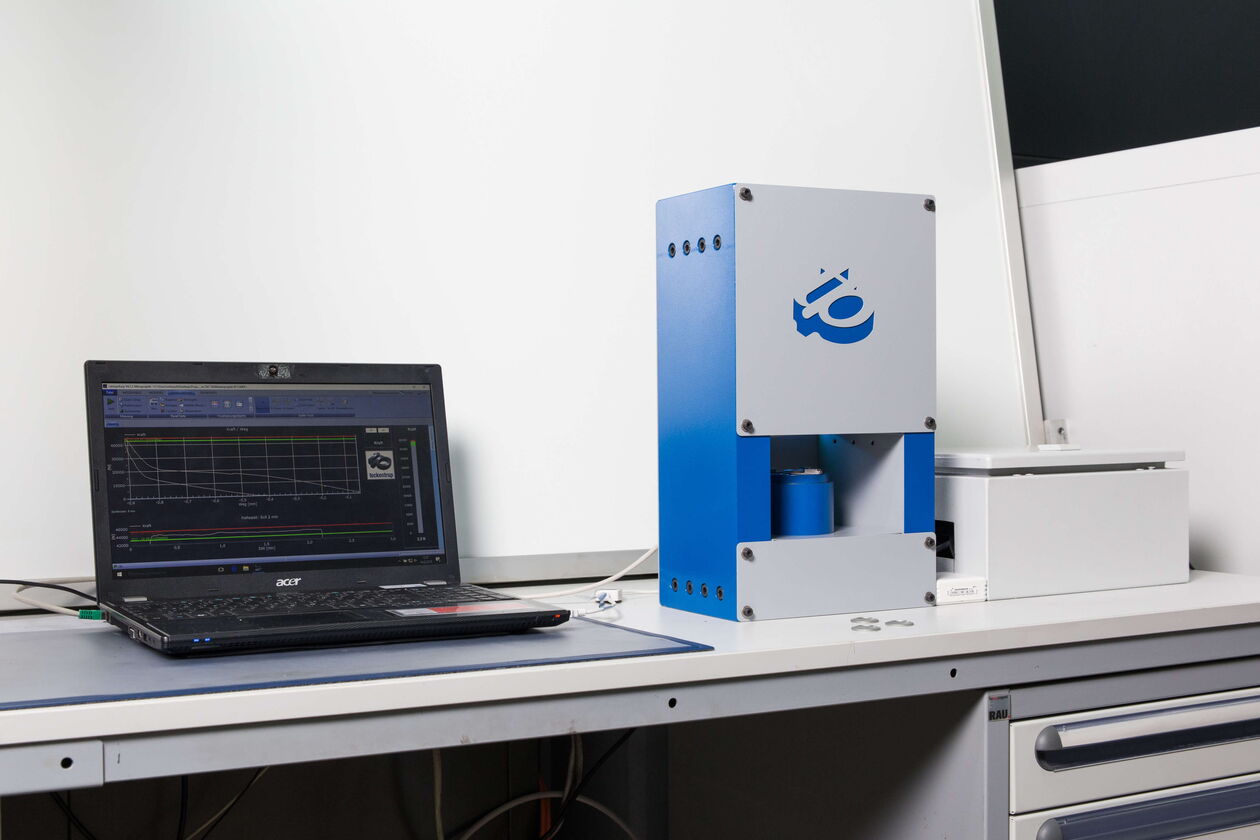
Determination of minimum residual spring force in accordance with DIN 267-26
Force measurement with a 20 μm reduction in load on the bolted joint (Technical Delivery Conditions for Spring Steel Lock Washers for Bolted Joints)
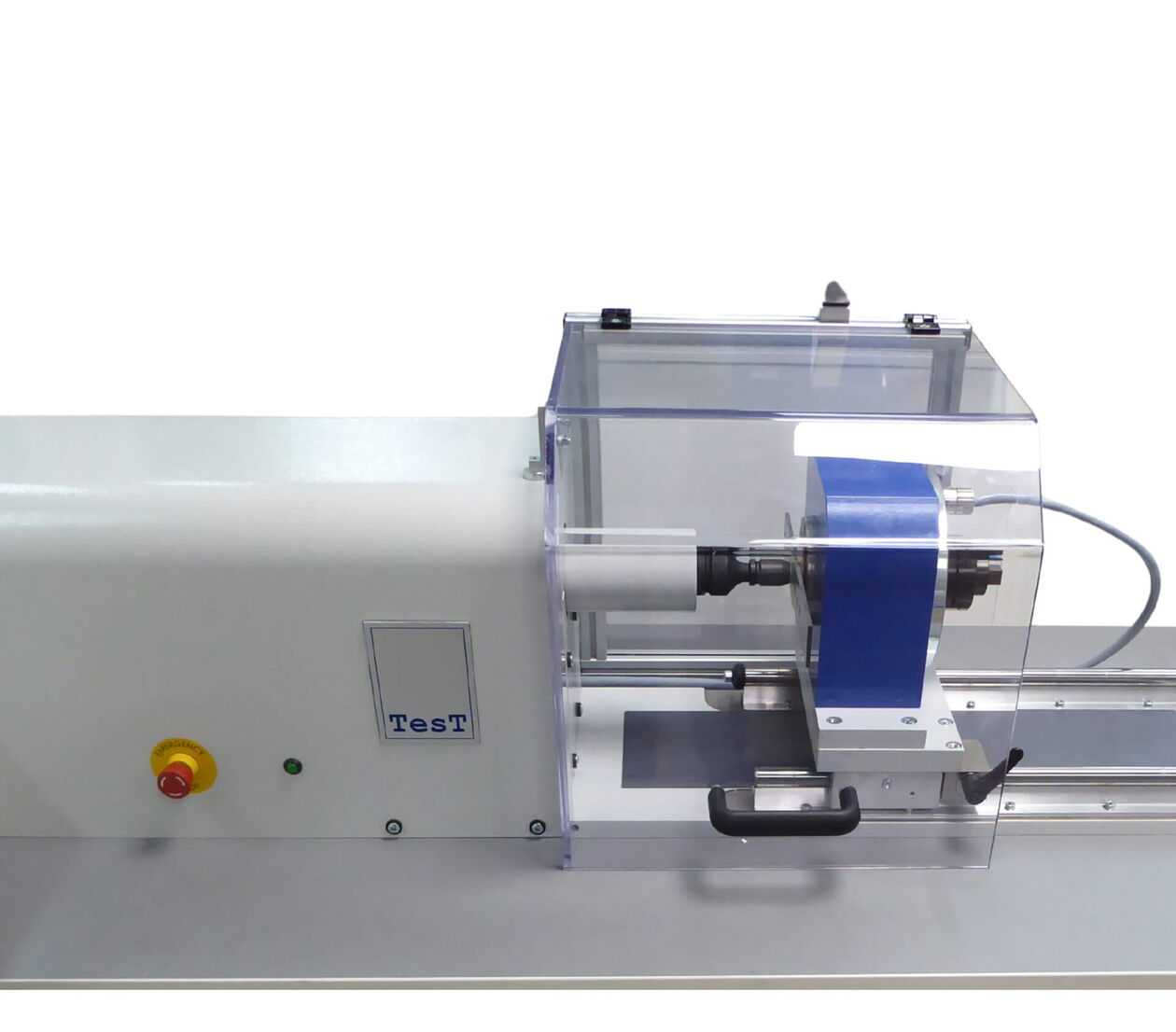
Coefficients of friction are determined in accordance with DIN 16047
The following factors are crucial for achieving a consistent and defined coefficient of friction with a narrow tolerance:
a.) the shape of the fastener
b.) the surface coating of the fastener
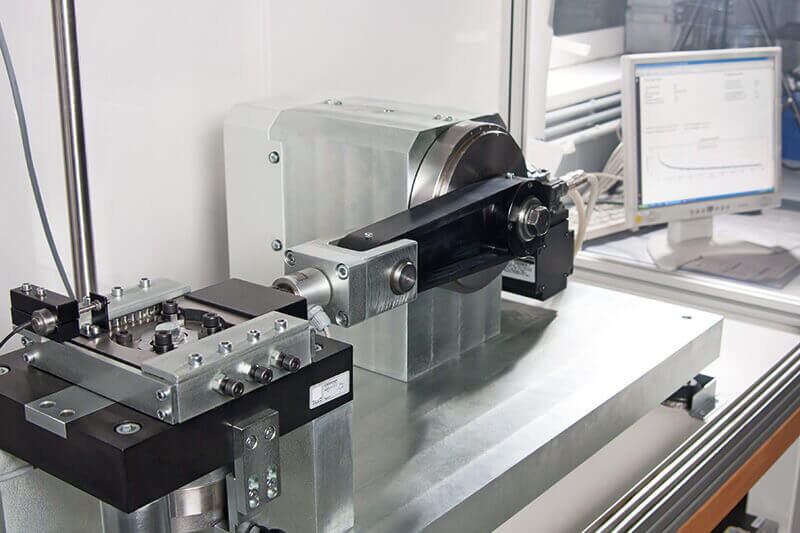
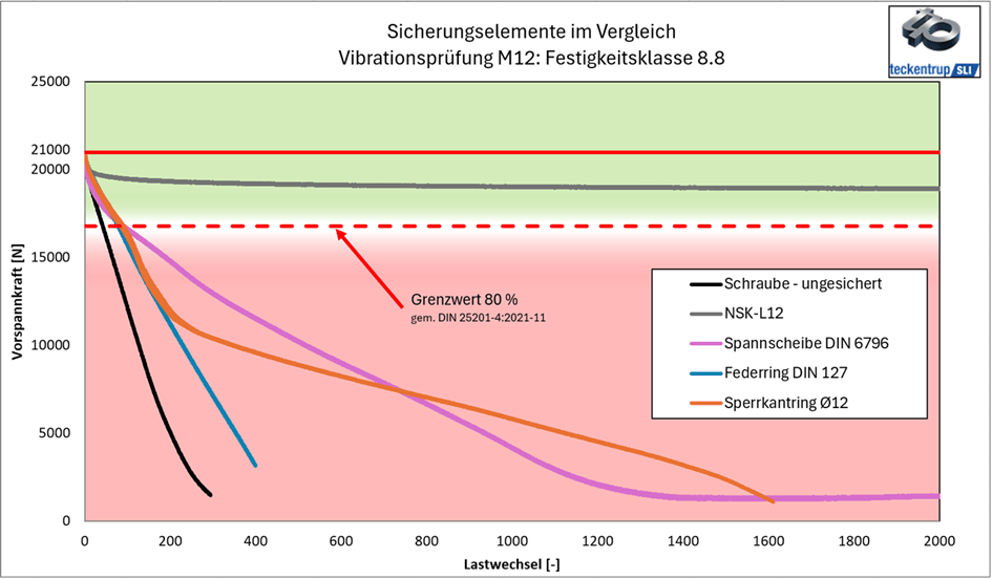
Vibration testing in accordance with DIN 65151 & DIN 25201-4, Annex B.
- Application-oriented testing using specimens with both circular and elongated holes.
- Internal tests are verified by external institutes.
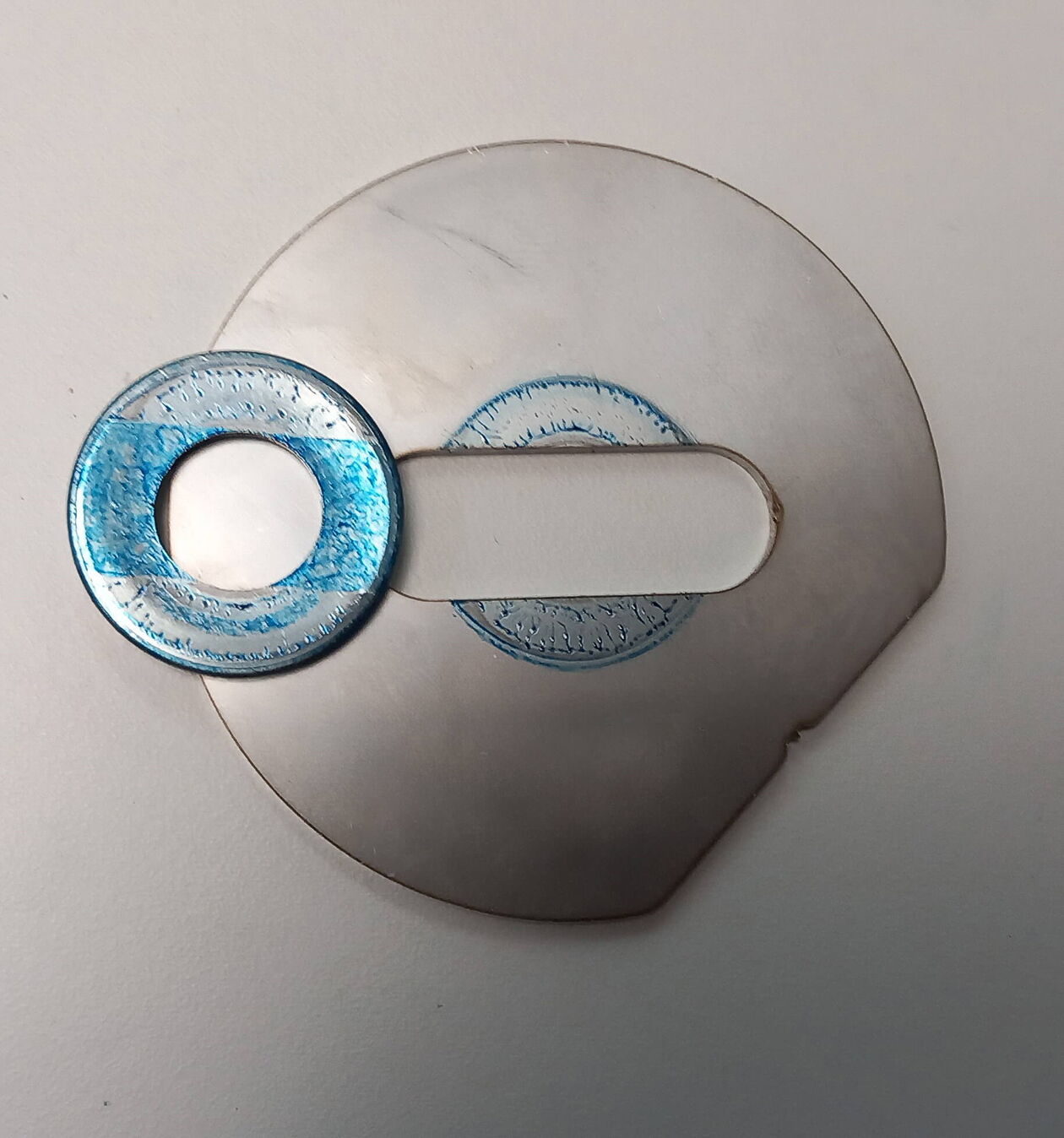
Pressure Cone Test
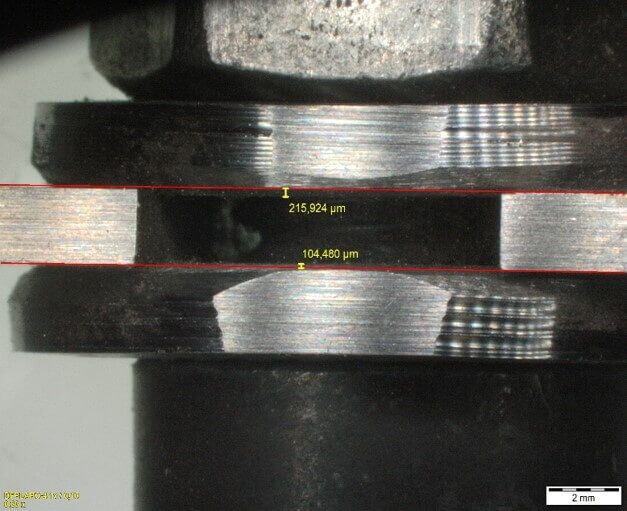
Deflection Tests
The functional properties and their testing procedures for slotted screw connections are not defined in standards. The tests conducted by teckentrup are provided for guidance.
It is up to the user to specify the properties and testing procedures for slotted connections.
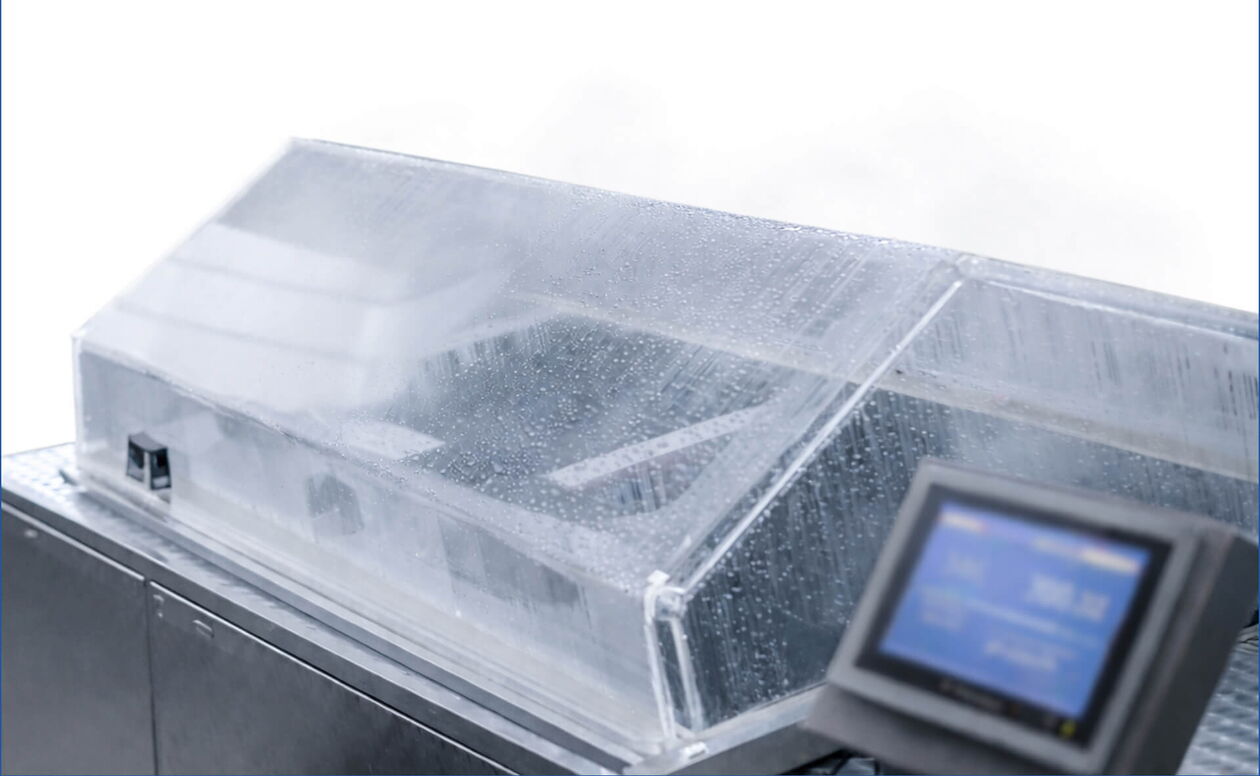
Environment-Specific Corrosion Protection Testing
Salt Spray Test per ISO 9227
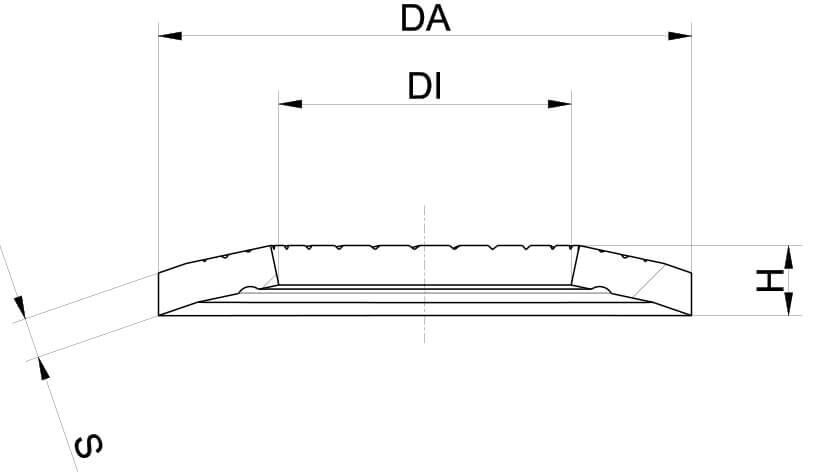
Spring steel version (C60 / C67) with zinc plate
| NSK-L | Article No. | DI | DA | S1 | H | Weight/1,000 pcs. | Pcs. per unit | 3D Download | Request |
|---|---|---|---|---|---|---|---|---|---|
| NSK-L6 | 070230 | Ø 6.10+0,48 | Ø 14.20-0,43 | 2.40±0.04 | 3.10±0.20 | 2,13 kg | 1.000 | Download | Add to request list |
| NSK-L8 | 070240 | Ø 8.20+0.58 | Ø 18.20-0.52 | 2.50±0.05 | 3.40±0.25 | 3,94 kg | 1.000 | Download | Add to request list |
| NSK-L10 | 070250 | Ø 10.20+0.58 | Ø 22.25-0.52 | 2.80±0.06 | 3.70±0.25 | 6,83 kg | 500 | Download | Add to request list |
| NSK-L12 | 070260 | Ø 12.40+0.58 | Ø 27.25-0.52 | 2.80±0.06 | 4.30±0.25 | 10,11 kg | 500 | Download | Add to request list |
| NSK-L14 | 070270 | Ø 14.40+0.58 | Ø 30.25-0,52 | 3.50±0.06 | 4.70±0.25 | 15,27 kg | 250 | Download | Add to request list |
| NSK-L16 | 070280 | Ø 16.40+0.58 | Ø 32.50-0.52 | 3.50±0.07 | 4.90±0.30 | 16,80 kg | 250 | Download | Add to request list |
| NSK-L20 | 070300 | Ø 21,00+0,58 | Ø 40,00-0,52 | 4.00±0.07 | 6.00±0.30 | 28,58 kg | 100 | Download | Add to request list |
Relaxation
Embedding
Loosening
Creeping
Elastic Resilience
Slip resistance
Slackening
DIN EN 17976
NSK Washers
DIN 267-26
DIN 25201
Corrosion protection
Slotted Screw Connections